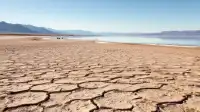

Utah’s state leadership on the drying Great Salt Lake has seen significant changes this week with the Senate’s confirmation of Hannah Freeze as the new lake commissioner and Jamie Barnes as the new chief of the Department of Natural Resources. Both officials, promoted from within their respective agencies, step into their roles as the lake’s water levels approach the historic low recorded in 2022.
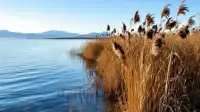
The decline of the Great Salt Lake continues to threaten Utah’s environment and economy. It also raises public health concerns as dust containing heavy metals can kick up from the lake’s exposed bed.
Hannah Freeze, who previously served as deputy Great Salt Lake commissioner, takes over for Brian Steed, who left to become a vice president at Utah State University. During her confirmation hearing on Tuesday before the Senate Natural Resources, Agriculture, and Environment Confirmation Committee, Freeze expressed her excitement to "be the quarterback and pull our many interested stakeholders into the Great Salt Lake huddle." Freeze, a former program manager in the Utah Department of Agriculture and Food’s water optimization program, noted her family operates a farm in Box Elder County, northern Utah.
Freeze conveyed to the committee that she views the relationship between the Great Salt Lake and agriculture as an opportunity to find solutions, rather than a source of conflict. She stated her aim to further develop trust and collaboration with farmers around the state, work with philanthropic groups, and engage federal officials to secure the $1 billion President Donald Trump proposed for the lake. Freeze has faced criticism in 2024 for selling hats with the phrase “Make alfalfa great again,” but her office has stated the hats drew attention to alfalfa’s value as part of the solution to water issues.
Jamie Barnes, who was previously Utah’s state forester, also brings experience within the Department of Natural Resources, examining policy and issues related to mineral extraction, rivers, and lakes, including the Great Salt Lake. Following the hearing, Barnes indicated that a primary focus for the Great Salt Lake is establishing a "really solid, long-term plan." She identified immediate priorities as managing a rock barrier that separates the lake’s north and south arms to control salinity, stabilizing the ecosystem, and managing dust. Barnes emphasized the critical need for long-term thinking, conservation, and planning to increase water flows to the lake.
Both Freeze and Barnes received praise during Tuesday's hearing from Brian Steed, representatives of the Utah Farm Bureau and the Great Salt Lake Watershed Enhancement Trust, and former Department of Natural Resources commissioner Joel Ferry. No opposition to their nominations was expressed during the committee hearing. Ben Abbott, executive director of the conservation group Grow the Flow, remarked that Utah "couldn’t have better leadership" to address the lake's challenges. Abbott noted that researchers have estimated it could cost the state hundreds of millions of dollars each year to replenish the lake.
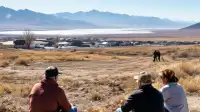
The new leadership begins its work as the Great Salt Lake continues its decline, attributed to decades of drought, climate change, and the redirection of water, most of it for agriculture. The lake reached its lowest recorded level four years ago before a season of record snowfall helped replenish some of it; however, levels have since dropped again. Abbott warned that without increasing water flows to the lake, Utah faces potential consequences of a lake collapse that "could come as soon as two or three years from now."
Next year, a new Senate president, a top decision-maker on lake policy and funding, will join state leadership after the defeat of Sen. Stuart Adams in the Republican primary. Sen. Scott Sandall, who voted to confirm Freeze and Barnes, told Utah News Dispatch that he believes the incoming Senate president will maintain a focus on the lake, recognizing its importance "not just for Northern Utah but across all of the state, and quite honestly, across the region."