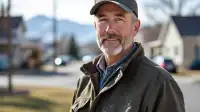

Scott Troxel, a Democratic candidate for the House District 18 seat, has outlined his priorities for the Legislature, focusing on affordability, public education, accessible healthcare, and addressing the shrinking Great Salt Lake. His platform, shared in response to a survey, emphasizes targeted property tax relief, zoning reforms for starter homes, and efforts to reduce childcare costs.
Troxel highlighted the Legislature's significant influence on daily life in Davis and Weber counties, noting its impact on property taxes, school funding per student, water availability for growth, and prescription drug costs. He expressed a belief that legislative decisions, often made quickly during the 45-day winter session with limited public input, bind communities for years and shape the future. Troxel stated that District 18 deserves a representative who treats this responsibility as a public trust, showing up, reading bills, reporting back, and working to improve residents' lives.
A key focus for Troxel is affordability. He advocates for property tax relief specifically aimed at middle-income homeowners and seniors. He also proposes zoning changes to facilitate the construction of starter homes and calls for significant action on childcare costs.
Regarding public schools, Troxel stressed the importance of keeping public money within public education. His proposals include ensuring competitive teacher pay, placing counselors in every school building, and conducting an honest accounting of programs that divert funds from public classrooms.
Troxel also addressed healthcare access and cost, proposing measures such as price transparency, lowering prescription costs, and ending surprise medical billing.
Another critical issue for the candidate is the Great Salt Lake. Troxel described its disappearance as an "existential crisis" that will require broad collaboration to reverse. He indicated a need for a radical shift in water use policies across all sectors, from agriculture to residential. He also stated that there should be no more data centers approved without genuine community input, requesting that water and power consumption be publicly modeled before any tax incentives for such projects are considered.
Troxel shared his professional and personal background as relevant to his candidacy. He has lived in the district for nearly two decades, with his children attending local public schools and his wife working in healthcare within the community. Professionally, he leads a large team at a public institution, managing budgets, people, and competing priorities under public scrutiny. He states this experience has provided him with an understanding of public money expenditure and potential waste.
Beyond his professional role, Troxel noted his past work as a private citizen, during which he wrote, advocated for, and helped pass legislation protecting children in Utah. He stated that this experience taught him how to navigate legislative committees, find sponsors, and build coalitions, indicating he "won't be learning that on the job." He also mentioned that he does not accept corporate PAC money, affirming that he "owe nothing to anyone but the people in this district."
On his approach to governing, Troxel emphasized compromise, particularly as a member of a minority party in the state Legislature. He indicated a willingness to pass "60 percent of something real" rather than advocating for "100 percent of nothing." He drew on his experience with child protection legislation, explaining that getting it passed required narrowing its scope, accepting budget concessions, and allowing members who had initially opposed it to support the final version. He noted that while it was less than his initial vision, the legislation has been "protecting Utah kids for more than a decade on." Troxel clarified that the only line he would not cross is "trading away someone’s rights or safety."
His general approach involves listening first, seeking guidance from experts, sharing his views, and then listen further. Troxel committed to actively seeking ways to include community members who may not have the time to attend committee hearings, through outreach, town halls, and open communication. He asserted his loyalty to his community and values, stating he would champion any good idea that helps Utahns, regardless of its origin. He also detailed how he would lean on his judgment guided by experts, specifically mentioning the need for honest measurement of water conservation and following voter-approved measures to end gerrymandering in redistricting.