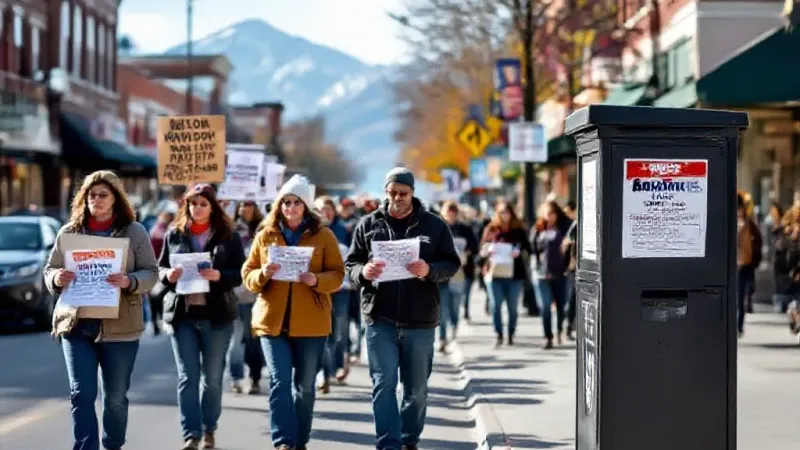
Salt Lake City residents participated in the city’s fourth “No Kings” demonstration on Saturday, using the march to deposit their votes in a downtown ballot drop box. The event, which followed the distribution of ballots to Utah mailboxes this week, aimed to express opposition to the Trump administration and specific Utah Republican leaders through civic action.
Utah Highway Patrol estimated approximately 2,000 people at the Capitol grounds, a smaller turnout compared to previous No Kings protests. From the Capitol, participants marched down State Street, with several hundred peeling off near City Hall to submit their ballots.
Salt Lake City resident Alan Sherwood, a retiree, marched near the front of the crowd, raising his ballot overhead. He was among those who delivered their votes at City Hall. Sherwood expressed satisfaction in casting their votes together, stating that it was crucial to exercise voting rights, particularly in the face of “authoritarianism all around us.” He also noted the intent for it to be a public display to demonstrate support for voting rights.
Kaylyn Tafoya, another Salt Lake City resident, chose to celebrate her 38th birthday by joining the demonstration and bringing her ballot. This marked her first time at a No Kings protest, drawn by the opportunity to join others in dropping off their ballots. Tafoya described the protest as “emotional” and reported that it instilled hope in her.
As the march progressed, participants engaged in chants, including “this is what democracy looks like” and “Salt Lake is a voting town.” Tim Elliott and Darlene McDonald were noted for leading chants as the crowd neared City Hall.
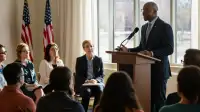
Speakers at the event highlighted various environmental concerns, drawing some of the loudest reactions from the crowd. Topics included data center construction and the removal of protections for public lands. Jessica Wiarda, a member of the Hopi Tribe and a local artist, spoke on the Capitol steps. She recounted the impact of President Donald Trump’s executive order that reduced the size of Bears Ears and Grand Staircase-Escalante national monuments, significant sites for native tribes. Wiarda characterized the executive order as making it “clear that Utah is the epicenter of Republican efforts to dismantle and obliterate America’s system of public lands.” She attributed President Trump’s actions to the urging of Utah politicians, naming Sens. Mike Lee and John Curtis, Gov. Spencer Cox, and Rep. Celeste Maloy, which drew boos and shouts of “shame!” from the crowd. Wiarda emphasized the importance of voting, noting that many of the politicians she mentioned were on the ballot.
Michael Wahlquist, president of the National Association of Letter Carriers, addressed the crowd regarding the significance of vote-by-mail. Wahlquist noted that President Trump’s criticisms of mail-in voting, despite his own use of it, disproportionately affect working families, individuals with disabilities, the elderly, and military members who may find in-person voting challenging. He expressed relief that the U.S. Supreme Court had blocked efforts to restrict voting by mail for the November midterms, allowing ballots to be sent unimpeded for now, but anticipated continued efforts against the system. Wahlquist urged attendees to “fight like hell to protect vote by mail,” warning that if votes are taken away, voices are lost.
Laura Allred, who drove from Eagle Mountain with her husband and children, also attended the protest. Allred, wearing a sweatshirt stating “Make Gilead fiction again,” expressed her desire for her 10-year-old daughter to understand how to use her voice. She articulated concerns including women’s rights, bodily autonomy, and the Great Salt Lake. Allred acknowledged the smaller crowd but stated that she felt the empowerment of being present and believed her attendance would make a difference.