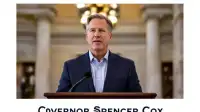
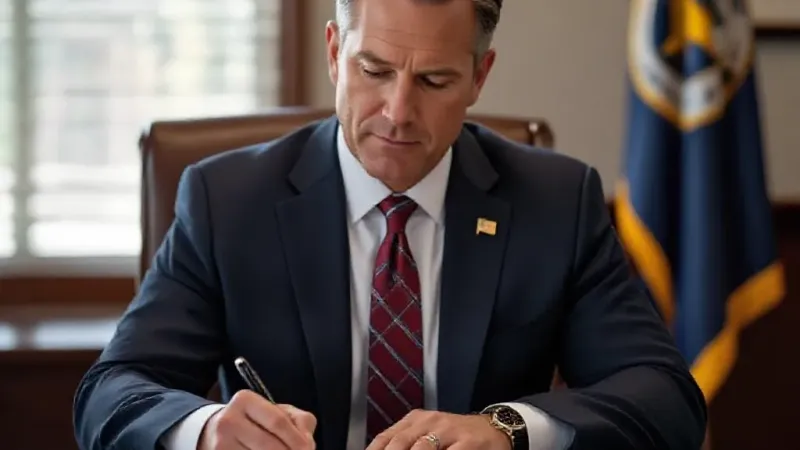
On Monday, Governor Spencer Cox made Utah the first state to officially join a national initiative from the Trump administration aimed at reducing addiction, homelessness, and serious mental illness. The Governor signed an executive order creating the Recovery Utah Initiative, an effort he views as a move towards a more holistic strategy focusing on recovery.
Kathryn Burgum, White House senior adviser for addiction and recovery, sat with Governor Cox as he signed the order. The directive calls for state agencies, local governments, healthcare providers, faith-based organizations, and private businesses to enhance coordination of services for homelessness and addiction. This statewide action aligns Utah with President Donald Trump’s Great American Recovery Initiative, which was established through a national executive order in January to prioritize addiction treatment and recovery across the country. Trump's order states that addiction contributes to declining workforce participation, increased healthcare costs, homelessness, family instability, and lost productivity, costing the United States hundreds of billions of dollars annually.
To steer the new initiative, Cox's executive order creates the Recovery Utah Initiative Council. This council will include State Homeless Coordinator Tyler Clancy and two individuals who have experienced addiction, serving as vice chairs. The order also incorporates three pillars that have guided Governor Cox's administration in addressing homelessness over the past year: accountability for "high utilizers" within the criminal justice system, emergency shelter and affordable housing, and robust mental and behavioral health infrastructure. Earlier this year, the Utah Legislature approved approximately $45 million in both ongoing and one-time funding to support this three-pillar strategy, which state officials developed in consultation with the Trump administration.
This move by the Trump administration signals a proposed shift in federal policy, favoring localities that prioritize "treatment-first" approaches. These policies emphasize sober living, increased cooperation with law enforcement, and more temporary and transitional housing options. This marks a reversal from the federal "Housing First" approach, which for a decade housed people experiencing homelessness without requiring sobriety or treatment participation as a condition for retaining housing. National housing advocates have voiced strong opposition to this shift away from Housing First, arguing it is a proven strategy that can reduce taxpayer spending on emergency services and the criminal legal system.
Leaders in Republican-controlled Utah, including Governor Cox, have criticized Housing First for what they describe as a lack of accountability measures, despite the state having previously led efforts in this strategy. They advocate for a greater emphasis on addiction and behavioral health treatment, either before or alongside housing services. Governor Cox told reporters that while housing is important, it "can’t be the first and only goal" and has not been effective in alleviating suffering. He added that "recovery has to be a part of that, and making sure that we have the resources in place to hold people accountable absolutely matters." His remarks were met with applause from the audience in the Gold Room of the Utah Capitol, where state officials and about a dozen people with lived experience of homelessness, addiction, or other challenges were present. Many of these attendees had participated in The Other Side Academy, a Utah-based training program praised by state leaders for its focus on accountability and recovery. Cox emphasized the need for accountability, stating, "When you talk to people who have actually been there and made it out the other side, every single one of them will tell you that they needed accountability."
When asked if the Utah initiative would divert resources from homelessness towards addiction recovery, Cox told reporters that he didn't know if resources would shift directly, but that the efforts are "part and parcel" and would work closely together. State Homeless Coordinator Tyler Clancy clarified that "Housing First means a lot of different things to a lot of different people," and he does not anticipate negative impacts on existing Utah programs employing Housing First strategies. Clancy stated that Cox's administration aims to "expand our toolkit" rather than limit it. He further explained that Utah's approach has always been to serve people's needs, and that he believes Housing First at a federal level "lost its way when it became housing only," prohibiting treatment or successful programs. Clancy stressed Utah’s commitment to a multi-faceted approach, supporting effective Housing First models while expanding options.
Kathryn Burgum, the former first lady of North Dakota, has openly shared her personal struggles with addiction. She described her connection to this work as personal, detailing her experience with blackouts, shame, and repeated attempts to stop drinking for 20 years, until she sought help. Burgum emphasized the importance of treating addiction as a chronic disease by building a "genuine continuum of care" and redefining how success is measured and funded. She explained that Trump’s executive order established the federal framework, and Cox’s order translates that into state action. Burgum underscored the necessity of collaboration, stating that no single entity can achieve this transformation alone. Regarding potential federal funding, Burgum indicated that they would be exploring how states can utilize existing funding, noting that many resources are already allocated across various departments. Governor Cox mentioned positive conversations with U.S. Department of Health and Human Services Secretary Robert Kennedy about Utah's efforts in homelessness, and that Utah intends to apply for available resources as they materialize.