
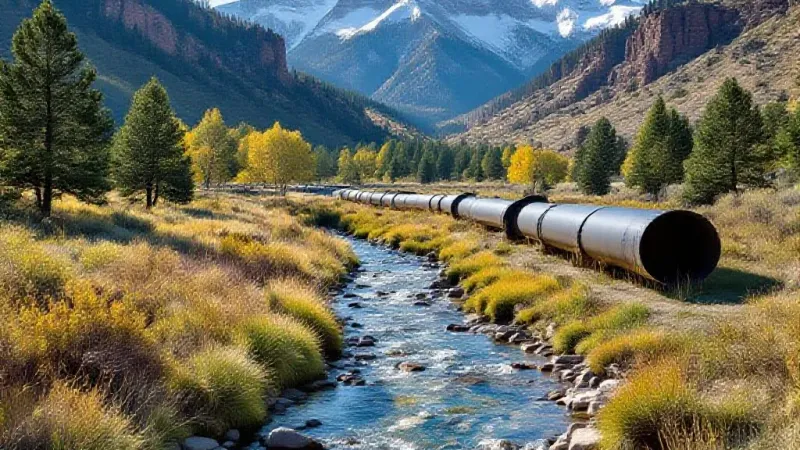
A proposed Sinclair pipeline route through Emigration Canyon is raising concerns among residents and community advocates who cite potential health risks, environmental damage, and increased fire danger, according to information presented by an expert witness in past litigation. These concerns stem from a history of fossil fuel pipeline incidents, including significant oil spills in Salt Lake City, and the specific hazards associated with gasoline transport through a high-risk area.
The U.S. Pipeline and Hazardous Materials Safety Administration (PHMSA) has recorded 9,329 fossil fuel pipeline leaking incidents since 2010, averaging at least 1.7 events daily. However, this figure may be an underestimation, as Texas alone reports an average of nearly 30 pipeline leaks per day.
Salt Lake City experienced two major oil spills within six months in 2010 from a Chevron pipeline. The first incident involved 33,600 gallons of crude oil escaping from a half-inch hole in a 10-inch pipe, which then flowed down Red Butte Creek, into Liberty Park Pond, and continued into the Jordan River. Chevron reportedly did not respond to the leak for over 10 hours, and it took another 10 hours to shut down the pipeline. A second spill from the same pipeline and area later released 21,000 gallons of Chevron oil.
These past events illustrate the severe consequences of pipeline failures. Residents living along Red Butte Creek experienced sickness from toxic vapors, suffering multiple symptoms for years afterward. In one household, a teenager was taken to the emergency room with sudden blindness lasting several hours, and the father, previously healthy in his late 50s, died five years later from pulmonary fibrosis, which was almost certainly caused by the exposure. Additionally, a healthy 40-year-old church groundskeeper who frequently worked near the creek for several years post-spill developed leukemia. Water sampling conducted over a year after the spill found carcinogenic chemicals in some locations at levels 400 times higher than the EPA’s “acceptable limits.”
Exposure to volatile organic compounds (VOCs) from oil spills can lead to decreased lung function, increased lung scarring, and impaired heart and liver function, according to information shared by an expert witness in litigation for affected patients. Abnormal blood counts are also common, along with chronic symptoms such as headache, shortness of breath, skin rash, cough, fatigue, painful joints, and chest pain, which can persist for years. The expert witness stated that the brain, bone marrow, and chromosomes are among the most vulnerable targets, with potential for permanent damage, and has observed severe neurologic impairment in children following such exposures.
Crude oil and its refined products contain at least 150 toxic chemicals, including benzene, ethyl benzene, toluene, and xylene (BTEX). While gasoline chemicals may have a slightly lower molecular weight, potentially making them less toxic to adults, they are considered more toxic to a developing fetus. Benzene, present in gasoline, diesel, and crude oil, is a potent toxin for which there may be no safe level of exposure.
For the proposed pipeline in Emigration Canyon, spilled gasoline is considered a greater hazard than crude oil. Gasoline’s properties allow it to penetrate soil and subsurface geologic formations more easily, increasing the risk of contaminating the well water relied upon by 300 Emigration homes and the entire Parley’s Mountain Dell watershed, which serves nearly 400,000 people. Furthermore, gasoline is significantly more flammable than oil, and its vapor is explosive, contributing to a substantial fire risk in a canyon described as having only one exit road and an “extreme” fire risk rating.
The motivation for Sinclair’s pipeline is reportedly to boost sales in Nevada and California, not to increase product delivery to Utah, which is not needed, according to the source material. Twenty-three percent of Utah’s refined products are currently shipped out of state, and instate demand is projected to fall by at least 19% by 2054.
Concerns also extend to corporate accountability. Chevron reportedly dodged paying for a long-term health study of exposed Red Butte residents. Sinclair may benefit from recently passed state legislation, HB591, which prohibits common-law civil claims for public and private “nuisance,” a tool critical for plaintiffs suing companies for damages, the source notes. This situation is characterized as an instance where corporations prioritize their profits by "socializing the risks and privatizing the profits."
Instead of seeking justice after an inevitable spill, Salt Lake City residents are urged to demand that local and state officials protect community interests over Sinclair’s. The use of eminent domain, which Sinclair might invoke, requires the pipeline to be a “common good,” a premise which city officials are encouraged to view as the opposite given the potential hazards.