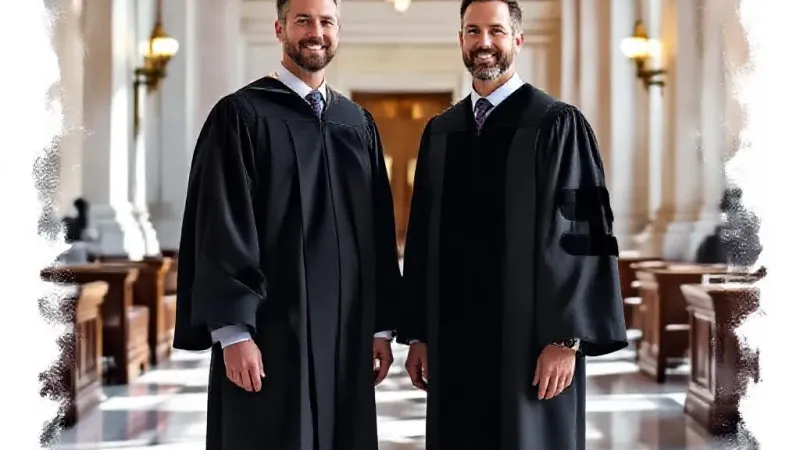
The Utah Senate on Wednesday confirmed two new justices, Matthew Bell and Michael Menssen, to the Utah Supreme Court, marking the completion of a significant restructuring of the state’s highest judicial body. The Senate voted 26-2 to approve the appointments, which fill vacancies left by the retirement of longtime Chief Justice Matthew Durrant and the resignation of former Justice Diana Hagen.
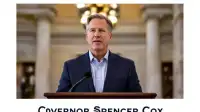
These confirmations follow a series of appointments this past year, during which Governor Spencer Cox has now appointed six of the seven justices currently serving on the court. Justice Paige Petersen, appointed in 2017 by former Governor Gary Herbert, is the only remaining justice from before this period of change.
The recent appointments come after the Republican-controlled Utah Legislature expanded the Supreme Court from five to seven seats earlier this year, adding to the turnover that also included former Justice John Pearce’s retirement last year. Prior to Bell and Menssen, Governor Cox appointed John Nielsen last fall, and Jay Jorgensen and Stephen Dent earlier this summer to fill the expanded seats.
The confirmation process for Judge Bell and Mr. Menssen saw little controversy or floor debate in the Senate chamber. The Senate Judicial Confirmation Committee had unanimously recommended both appointments on Monday. However, two Democratic senators, Nate Blouin and Kathleen Riebe, cast the dissenting votes.
Senator Riebe stated her opposition stemmed from a "lack of diversity" and "lack of women" in both the Legislature and the state’s highest court. She noted that until recently, women constituted a majority on the court, but with Justice Hagen's resignation and the court's expansion, Associate Chief Justice Jill Pohlman and Justice Petersen are now outnumbered by five men. Riebe questioned if the low number of female applicants reflected discomfort, stating, “I rise in support of women who don’t feel comfortable applying for these jobs.”
During their confirmation hearings, both Bell and Menssen emphasized their judicial philosophies of "originalism" and "textualism," which focus on the original meaning of the Constitution. Governor Cox and Republican legislators have consistently highlighted these philosophies as important for future Supreme Court justices.
Matthew Bell comes to the Supreme Court after nine years as a 5th District Court judge in southern Utah, serving Washington, Iron, and Beaver counties. His prior experience includes working as an assistant U.S. attorney and a trial attorney in the U.S. Department of Justice’s antitrust division. He began his career as a corrections officer and police officer. After his confirmation, Bell pledged to uphold the Utah and U.S. constitutions “without regard to political pressure, public opinion or personal preference.” He is a graduate of Brigham Young University.
Michael Menssen is a civil litigator known for his work in complex commercial and labor law. Governor Cox previously praised Menssen as "one of the finest civil litigators in our state" and for his efforts to expand legal aid for low-income Utahns. Menssen stated that being entrusted to interpret state law and the Constitution is a "sacred responsibility" and pledged to always give the position the necessary work and respect. He received his law degree from the University of Virginia.
The legislative discussions surrounding these appointments and the court's expansion have been set against a backdrop of Republican lawmakers expressing frustration with recent judicial rulings. Notably, an anti-gerrymandering lawsuit brought by the League of Women Voters of Utah and Mormon Women for Ethical Government challenged the Legislature’s 2022 congressional boundaries. Third District Judge Dianna Gibson ruled the 2022 boundaries unlawful, finding that lawmakers had unconstitutionally replaced a voter-approved 2018 law, Proposition 4. After the Legislature failed to adopt a lawful remedial map, Judge Gibson ordered a plaintiff-drawn map to be used for the 2026 elections. This decision, which "infuriated Republican lawmakers," spurred arguments that Gibson exceeded her constitutional authority.
During confirmation hearings, lawmakers questioned Bell and Menssen on the Supreme Court’s role in checking other branches of government and how they would approach rulings with which they might disagree. Senator Todd Weiler, R-Woods Cross, specifically asked about the authority of Utah judges to declare legislative or executive actions unconstitutional and the limits on their own power.
Justice Bell clarified his view, stating he doesn't see himself as a check on the Legislature or the executive branch. Instead, he views the judiciary as an independent branch and the constitution itself as the check on all three branches. He affirmed his duty to strike down government actions that exceed constitutional boundaries, but stressed the importance of first vigorously policing the boundaries of his own authority, asserting that failure to do so would undermine public confidence. Both Bell and Menssen maintained that their decision-making would always be guided by the constitution.