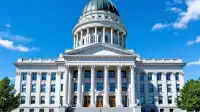
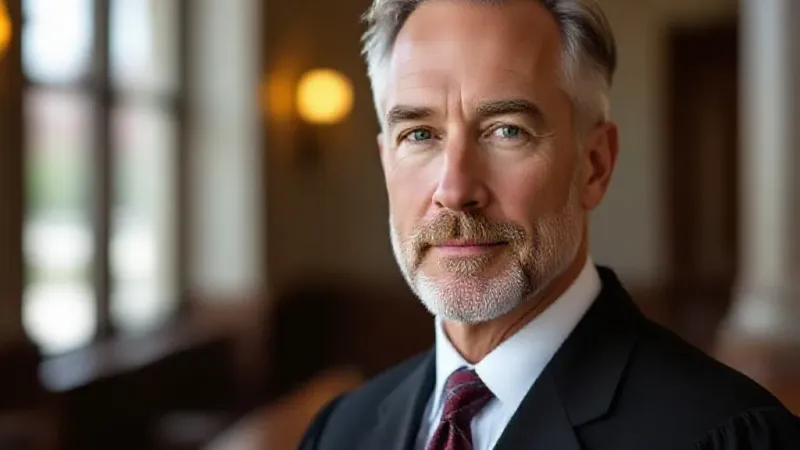
Utah Supreme Court Justice John Nielsen, who joined the state’s highest court last fall, has recused himself from two significant cases challenging the constitutionality of the Utah Legislature’s recently created rotating three-judge “constitutional court.” This panel is specifically designed to hear challenges to state laws.
Justice Nielsen’s most recent recusal occurred on September 3, affecting a case stemming from an ongoing challenge to Utah’s near-total abortion ban. Planned Parenthood Association of Utah sought his disqualification, arguing in a July motion that his “impartiality might reasonably be questioned.” Planned Parenthood’s attorneys highlighted Nielsen’s prior work as a private attorney, when he helped file an amicus brief on behalf of Pro-Life Utah in 2022 during the initial legal fight over the state’s abortion ban.
The Utah Attorney General’s office, in an August 5 filing, disagreed, stating the state had “no concerns” about Nielsen hearing the appeal to the three-judge panel. They argued that different appellate proceedings, separated by years and involving distinct issues, should not necessarily lead to questions of impartiality. While a clerk for the Utah Supreme Court wrote in July that Nielsen initially did not believe amicus representation was a basis for disqualification, he nevertheless disclosed his previous involvement. Ultimately, on September 3, Nielsen reversed his position and decided to recuse himself.
In the recusal notice, a clerk wrote that Nielsen concluded “on further reflection that the duty to recuse is stronger,” despite acknowledging strong reasons to sit. With Nielsen’s recusal, a judge from another court will be invited to join the panel. Oral arguments in the abortion case are scheduled for October 5.
Shireen Ghorbani, President & CEO of Planned Parenthood Association of Utah, issued a statement appreciating Nielsen’s recusal. She noted that rules about recusals are clear: a judge should recuse when their impartiality could reasonably be questioned.
This recent decision follows an earlier recusal by Justice Nielsen in April from a challenge to the three-judge panel originating from an anti-gerrymandering case. At that time, Nielsen voluntarily disqualified himself, citing his work as a private attorney where he represented the Utah Republican Party in a prior appeal of the underlying anti-gerrymandering case. A Utah Supreme Court clerk explained that Nielsen had “worked very closely with the Legislature’s counsel and offered advice on the broader litigation,” leading him to feel he had acted as counsel for the Legislature.
The new three-judge “constitutional court” was created by the Utah Legislature to specifically hear constitutional challenges to state laws. Its formation came after the Utah Supreme Court’s decision in 2024 not to lift an injunction blocking the state’s near-total abortion ban, a ruling that reportedly "infuriated" the Republican supermajority of the Utah Legislature. Currently, abortion remains legal in Utah up to 18 weeks gestation. The state governor swiftly signed the bill establishing this new court.
Soon after its creation, Utah’s Attorney General and the Legislature moved to transfer several cases, including the anti-gerrymandering and abortion cases, to the new panel. However, plaintiffs in those cases quickly countered by asking the courts to block the new legislation itself, arguing it is unconstitutional. Opponents of the new panel suggest it enables state leaders to “forum shop” cases away from judges who have not issued favorable rulings. Conversely, proponents, including Senate President Stuart Adams, R-Layton, maintain that its structure, which includes randomly selected judges, is designed to prevent such concerns.
Challenges to the constitutionality of the new “constitutional court” have now reached the Utah Supreme Court, causing a pause in arguments for the underlying court cases. These developments unfold as the state’s highest court undergoes significant changes. The Utah Legislature earlier this year expanded the court from five to seven justices, creating two openings that Governor Spencer Cox filled with Stephen Dent and Jay Jorgensen, both confirmed by the Utah Senate in June. Two additional vacancies emerged following the resignation of former Justice Diana Hagen and the retirement of longtime Chief Justice Matthew Durrant. Governor Cox recently nominated attorney Michael Manssen and 5th District Judge Matthew Bell to fill these seats, with their appointments awaiting confirmation from the Utah Senate. Justice Nielsen himself was appointed to the bench last year, filling a vacancy left by former Associate Chief Justice John Pearce.