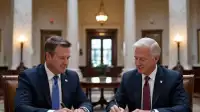
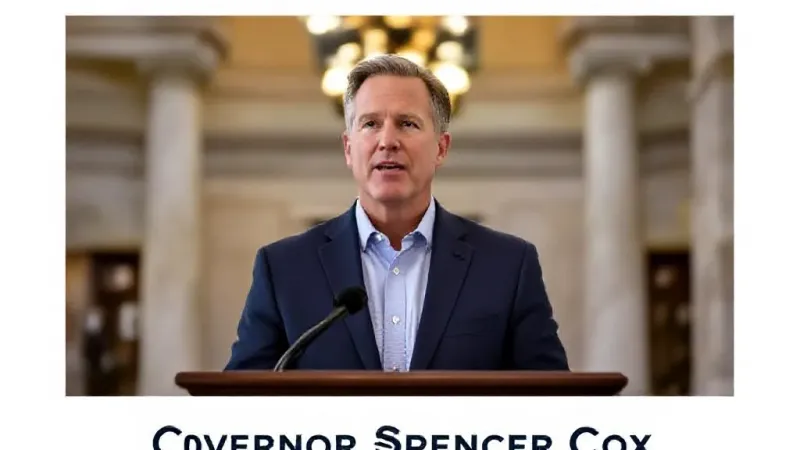
SALT LAKE CITY — Utah has become the first state to officially join a national initiative aimed at reducing addiction, homelessness, and serious mental illness. On Monday, Governor Spencer Cox signed an executive order creating the "Recovery Utah Initiative," aligning the state with President Donald Trump’s "Great American Recovery Initiative."
The signing took place in the Gold Room of the Utah Capitol, with Kathryn Burgum, White House senior adviser for addiction and recovery, present. The initiative directs state agencies, local governments, healthcare providers, faith-based organizations, and private businesses to enhance coordination of services for homelessness and addiction across multiple fronts.
The Trump administration's "Great American Recovery Initiative," established in January, prioritizes addiction treatment and recovery, citing addiction's contribution to declining workforce participation, increased healthcare costs, homelessness, family instability, and lost productivity. This federal effort proposes shifting homelessness grants toward addiction treatment and enforcement, signaling a departure from the decade-long "Housing First" federal approach, which provides housing without requiring sobriety or treatment participation.
Governor Cox's executive order establishes the Recovery Utah Initiative Council to guide these efforts. The council will include State Homeless Coordinator Tyler Clancy and two individuals who have experienced addiction, serving as vice chairs. The initiative also incorporates Cox’s "three pillars" that have guided his administration’s strategy for the state’s homeless system: accountability for "high utilizers" in the criminal justice system, emergency shelter and affordable housing, and mental and behavioral health infrastructure. Earlier this year, the Utah Legislature approved approximately $45 million, including ongoing and one-time funds, to support Cox’s three-pillar strategy, which state officials developed in consultation with the Trump administration.
National housing advocates have voiced concerns over the shift away from "Housing First," arguing it is a proven strategy for reducing taxpayer spending on emergency services and the criminal legal system. However, Utah leaders, including Governor Cox, have criticized "Housing First" for perceived lack of "accountability" measures, advocating for greater emphasis on addiction and behavioral health treatment alongside or prior to housing services.
Governor Cox stated that he views the Recovery Utah Initiative as an extension of the Trump administration's move away from "Housing First" and toward a more holistic strategy focused on recovery. While acknowledging the importance of housing, Cox told reporters, "housing is important. We want people to have shelter, but that can’t be the first and only goal." He added that recovery and accountability are crucial, noting, "Recovery has to be a part of that, and making sure that we have the resources in place to hold people accountable absolutely matters."
State Homeless Coordinator Tyler Clancy clarified after the news conference that while "Housing First means a lot of different things to a lot of different people," he does not anticipate negative impacts on Utah programs utilizing "Housing First" strategies. Instead, he said the administration is "expanding our toolkit," explaining that federal "Housing First" had "lost its way when it became housing only, when it prohibited people from doing treatment."
Kathryn Burgum, who co-chairs the Great American Recovery Initiative, shared her personal journey with addiction, emphasizing the need to treat addiction as a chronic disease. She called for "building a genuine continuum of care" and changing how success is defined and paid for. Burgum highlighted the necessity of collaboration, stating, "The federal government cannot accomplish this transformation by itself. State cannot accomplish it alone. And healthcare systems cannot accomplish that alone." When asked about potential federal funding increases for Utah, Burgum noted that they would "be looking at how states can use funding," with much already allocated across various departments.
Governor Cox mentioned that U.S. Department of Health and Human Services Secretary Robert Kennedy is "very excited about what they’re seeing here in Utah," and the state plans to apply for resources as they become available. The audience at the signing included state officials and individuals who have experienced homelessness, addiction, or other life challenges, many of whom have participated in The Other Side Academy, a Utah-based training program commended by state leaders for its accountability and recovery-focused approach.