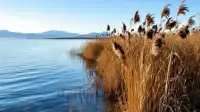
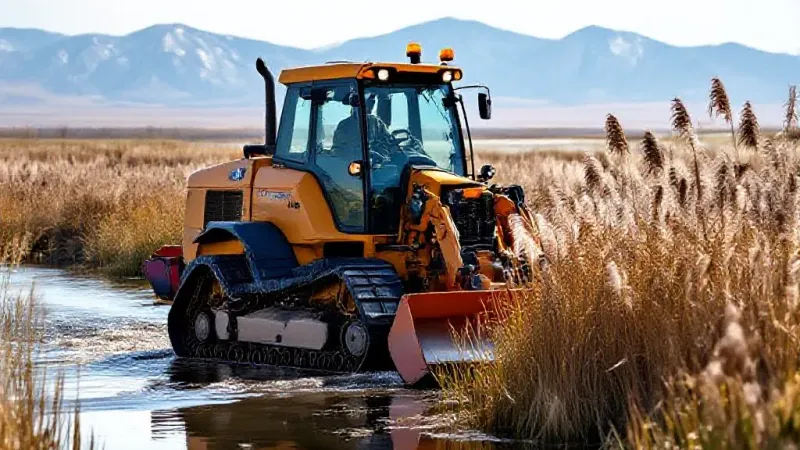
State land managers informed legislators at the Utah Capitol this week that aggressive efforts to remove tall, invasive reeds, known as phragmites, from around the Great Salt Lake could yield an estimated 82,000 more acre-feet of water. This amount is sufficient to cover the yearly indoor water needs for a community the size of West Valley City.
Floods four decades ago decimated native plant life, leaving the Great Salt Lake vulnerable to these thirsty reeds. Beyond consuming significant water, the invasive plants crowd out native species and diminish vital habitat for migratory birds.
Lawmakers from both parties on the Legislative Water Development Commission convened Thursday and concurred that controlling the phragmites presents “low-hanging fruit” toward the state's ambitious target of delivering 800,000 more acre-feet of water each year.
Keith Hambrecht, restoration manager with the Division of Forestry, Fire, and State Lands, highlighted similar successful efforts at Utah Lake. There, administrators in the Division of Forestry, Fire and State Lands reported a nearly 90% reduction in the reeds' cover of the lake bed.
Regarding the Great Salt Lake, Hambrecht stated that Utah has made progress against the invasive plants across thousands of acres. However, he emphasized that the undertaking demands more time and continued financial commitment. The state currently allocates $800,000 annually to this initiative, with an additional $2.2 million set aside this year. Hambrecht projected that with sustained financial support, the majority of the reeds immediately surrounding the lake could be removed within the next decade.
Despite progress near the lake, significant work remains further from its shores, particularly in controlling upstream sources. Hambrecht noted that this work is logistically more challenging and likely much more expensive. He explained, "We’ve done a really good job in the wetlands, but phragmites is throughout the watershed. It’s in ditches, canals, streams. It’s all over the place."
To address this broader challenge, the legislative panel discussed potential strategies for stepping up the response across the entire watershed, including the need for greater coordination among counties. Such efforts could be bolstered by assistance from the Great Salt Lake commissioner.
Successful phragmites eradication is also influenced by environmental conditions. State officials prioritize herbicide treatments during wet periods, as the chemicals are less effective in dry years. Sen. Mike McKell, R-Spanish Fork, underscored the importance of timing and funding, suggesting that the state could inflict considerable damage on these phragmites by paying attention and securing funds when most effective.