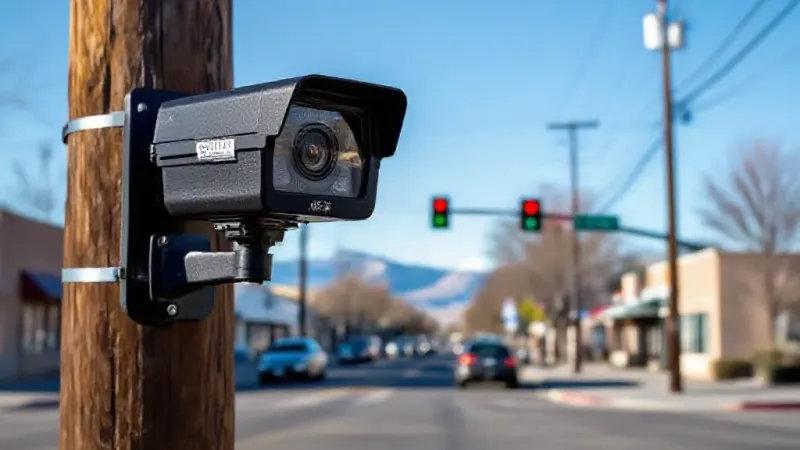
Utah lawmakers are preparing a bill proposal to strengthen privacy protections on automated license plate readers, months ahead of the upcoming legislative session. The legislative push comes as concerns over potential misuse of the technology, including a significant amount of out-of-state data searches from Weber County, have been raised by state leaders.
Sen. Calvin Musselman, a West Haven Republican and chair of the Law Enforcement and Criminal Justice Interim Committee, stated during a recent meeting that the discussion is not about whether the cameras should be allowed in the state. Instead, the focus is on implementing additional regulations for various technologies used by law enforcement, including license plate cameras. Musselman acknowledged the "value for law enforcement purposes" while also recognizing "legitimate concerns on privacy."
This proposed legislation is being developed amidst expressions of concern from Utah leaders, including Gov. Spencer Cox, regarding cases of misuse across the country. Governor Cox stated last month that he was "deeply troubled" by findings from an investigation by the Utah Civic Compact. This investigation revealed that almost 97% of the searches made in Weber County’s Flock database originated from law enforcement agencies located outside of Utah.
Currently, Utah law restricts searches of license plate camera databases to specific situations: active criminal investigations, outstanding warrants, searches for missing or endangered persons, or for stolen vehicles. Despite the technology being used by law enforcement for years, recent concerns have emerged from accusations that police officers in other states have used Flock camera data to track individuals they know, rather than for official job duties.
In response to these issues, Governor Cox requested that the Utah Privacy Governing Board and the Utah Privacy Commission conduct a comprehensive review of all regulations surrounding the cameras in Utah. He also asked them to investigate how local agencies are currently using the technology. During a recent PBS news conference, Cox indicated he would support legislation to correct any gaps identified in the current law. However, he also added that he believes the existing legislation "should allow us to protect people’s privacy."
Christopher Bramwell, Utah’s chief privacy officer, informed the committee that the Privacy Governing Board is working to gather facts objectively as part of its review. Bramwell noted that there is often a "conflation" of actual law enforcement actions with what the system is capable of, or features that don't exist. He stated that gathering facts about current practices versus system capabilities would help alleviate pressure from various sides.
The review process is complex because license plate readers are utilized in contexts beyond traditional law enforcement, such as within higher education institutions and by the Utah Inland Port Authority. Bramwell pointed out that Utah has a comprehensive government data privacy law, which is reviewed annually, but lacks a similar framework for cybersecurity. He suggested that while new requirements are being discussed specifically for law enforcement, some of these requirements might be beneficial if applied more generally.
Meanwhile, leaders within law enforcement have urged that the technology remain available in the state. The Utah Law Enforcement Legislative Committee (ULELC), which advocates for organizations representing police chiefs, sheriffs, peace officers, and prosecutors, issued a statement affirming their commitment to using the technology responsibly. ULELC expressed its belief that the responsible use of ALPR technology allows for the protection of both public safety and individual rights, rather than presenting a choice between the two.