
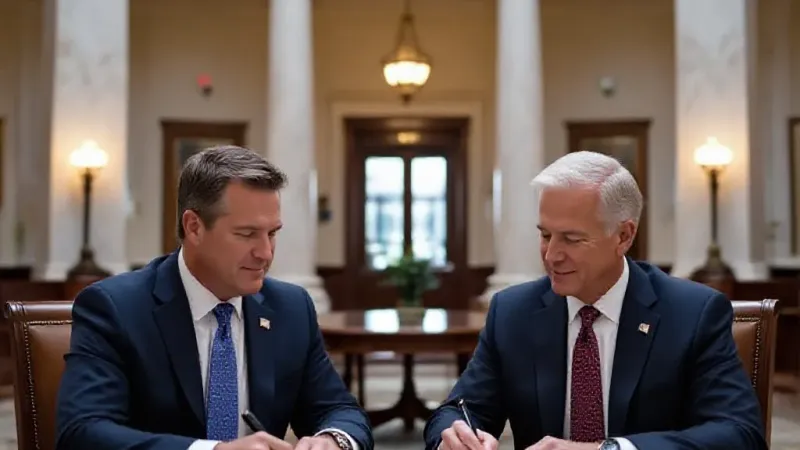
SALT LAKE CITY — Utah has partnered with the White House to launch a new initiative focused on addiction recovery, with state and federal officials signing documents Monday at the Utah State Capitol.
The "Utah Recovery Initiative" will implement a "whole-of-government approach" to change how the state prevents and treats addiction, according to Governor Spencer Cox. Utah is the first state to join President Trump's "Great American Recovery Initiative," a series of executive orders designed to streamline government services for individuals seeking treatment or in recovery.
The initiative also establishes a special council that will unite state agencies, private sector organizations, and faith-based groups with individuals who have firsthand experience with homelessness and addiction recovery.
Outside the Gold Room where the signing took place, attendees wrote their perspectives on recovery, tacking cards to a board. One card read, "Drug free, crime free, housed, employed!" while another stated, "Living in gratitude for what you have day by day." These reflections came from people with personal understanding of addiction and the recovery process.
Kathryn Burgum, a senior advisor to the president on addiction, addressed the assembly, stating that the initiative is about examining the current "fractured system" for addiction. Burgum, who has been in recovery for two decades, advocated for treating addiction as a chronic disease, similar to diabetes. She shared her own struggles with alcohol addiction before getting help and encouraged others in recovery to continue their efforts.
Many in attendance who are in recovery expressed optimism about the initiative's potential benefits for Utahns needing assistance. Destiny Garcia, representing Clean Slate Utah, highlighted a component that includes people with lived experience. Garcia, who has nine years in recovery from homelessness, addiction, and trauma, believes that having individuals with lived experience reach out to her sooner could have expedited her path to help.
Tyler Hansen, a therapist and head of Steps Recovery Center, also offered his perspective. Hansen, a former baseball player whose struggle with Oxycontin led to prison, is now in recovery. While he appreciates the initiative's approach, he identified potential funding needs, stating that "access to care part is kind of what we’re looking at" and noting existing "gaps" despite many treatment centers.
Dr. Monty Brooks, the executive director of the Great American Recovery Initiative, informed reporters that faith communities will be provided with resources and guidance on how to connect people to existing services. These communities, he added, will collaborate with the federal government to enhance available resources. Governor Cox confirmed he has already engaged in initial discussions with faith groups, including The Church of Jesus Christ of Latter-day Saints, regarding their involvement.
The state's homeless services are also slated for significant involvement in the initiative. Tyler Clancy, the governor's homelessness coordinator, clarified that the new initiative will not alter the state's recent shift away from the concept of a large campus for unsheltered people. Instead, the state continues to focus its efforts on individuals who are the most frequent users of health care, criminal justice, and other public systems. Clancy told reporters that the state "don’t take a one-size fits all approach" and is focused on "expanding our tool kit rather than limiting it."