
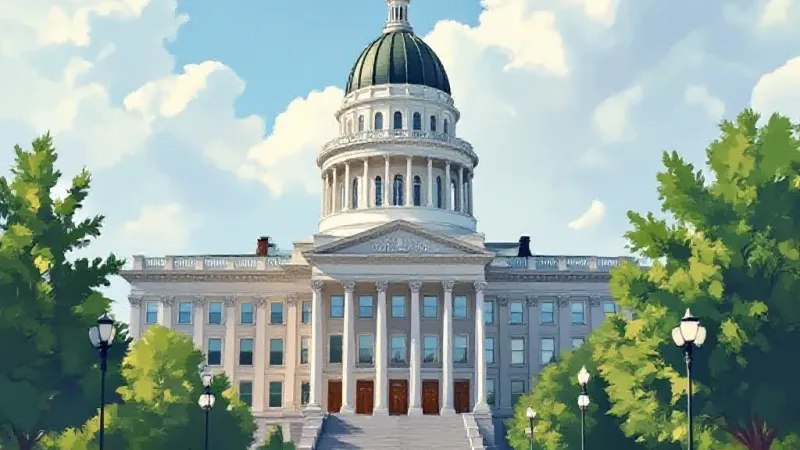
Utah, a state with a unique and extensive history concerning the firing squad, is now at the center of a national discussion as other states and the U.S. military begin to revive the controversial execution method. The state is being urged to draw on its decades of experience, having performed every firing squad execution in America for 48 years since 1977, to lead a move toward ending the practice nationwide.
Since 1977, Utah carried out three firing squad executions: Gary Gilmore, John Albert Taylor, and Ronnie Lee Gardner. These events involved specific protocols, including five rifles, a chair, a hood, a white target pinned over the heart, and sandbags stacked behind the chair to prevent ricochets. When the state executed Gardner in 2010, reporters were allowed to witness the event. Accounts from those present describe Gardner's arm jerking back with the impact, his fist clenching and letting go, with his hand continuing to move for two minutes. Some witnesses reportedly wondered if a second shot would be needed. Blood was observed gathering in his lap. Following the execution, reporters toured the room, noting it smelled of bleach, and observed four bullet holes in the paneling behind the chair, all within four inches of each other. The state's medical examiner photographed the body, and those photographs are reportedly kept by Gardner's brother, Randy.
Utah has not used the firing squad since Gardner's execution. In 2004, the state stopped allowing new prisoners to choose the rifle as an execution method. However, in 2015, the method was written back into state law for situations where lethal injection drugs might become unavailable. Last year, the state signed a warrant to execute Ralph Menzies by firing squad, a man reportedly suffering from dementia. The Utah Supreme Court intervened and stopped the warrant, and Menzies died last November. In 2024, Taberon Honie died by pentobarbital.
The door left open by Utah's legislative actions and historical precedent has been walked through by other entities. South Carolina reportedly shot three men in 2025. Idaho has since made the rifle its first choice for executions, and Indiana attempted to adopt the firing squad earlier this year. Perhaps most notably, on December 3, the U.S. military plans to execute Nidal Hasan by firing squad at Fort Hood. This would mark the first military firing squad execution since World War II. President Donald Trump reportedly approved the execution. Hasan is paralyzed and uses a wheelchair, and the military intends to shoot a man who cannot stand up.
The state's unique past with the firing squad is invoked to challenge common assumptions about capital punishment. Proponents often frame executions around four promises: certainty, humanity, honesty, and free choice. However, Utah's experience is presented as evidence that these promises are often not met.
Regarding certainty, the state never trusted a single gun, instead using five rifles. Even with five, Gardner's hand moved for two minutes. In South Carolina last year, lawyers for Mikal Mahdi contended that the bullets missed his heart. The argument is made that while a state can write a protocol, it cannot ensure a body obeys a bullet.
On humanity, Utah built the chair and the wall with the gunport, and the smell of bleach after an execution indicates its purpose. The Utah Legislature's decision in 2004 to remove the firing squad as a choice for new prisoners suggests an internal recognition that there is "nothing humane about shooting someone."
The promise of honesty is questioned by the practice of loading one of the five rifles with a blank. This practice, intended so no officer has to know they fired the fatal shot, is described as a confession that the emotional weight of taking a life is too much for one person to carry alone. Washington state is reportedly learning this same lesson.
Finally, free choice is examined through the lens of individuals like Gilmore, Taylor, Gardner, and Menzies, who reportedly chose the rifle method. The source argues that this choice was never truly theirs, asserting that horrific choices inevitably lead to further horrific choices.
A collective conscience within Utah is believed to have been stirring since 2004. This internal shift was evidenced by the family of Michael Burdell, the man killed by Ronnie Lee Gardner, who asked the state not to execute Gardner, stating he would not have wanted it. Religious leaders from various faiths across the state also voiced similar opposition. Furthermore, in 2016, a Republican senator who had previously supported executions carried a repeal bill through the Utah Senate, and another senator attempted repeal in 2018.
With this history and ongoing internal debate, Utah is now being called upon to lead. Having been the first state to resume executions after the U.S. Supreme Court allowed it, Utah is encouraged to be the state that ends the firing squad. The call is to repeal the method before more states adopt it and to send a message to Idaho, Indiana, the military, and the President, based on its experience and visual records, that the practice yielded no positive outcomes and the gun should be put down. The urgency is emphasized, urging action before another body, specifically Nidal Hasan, is obliterated on December 3. The nation, it is argued, needs Utah's help to put down the gun and end what is described as moral insanity.