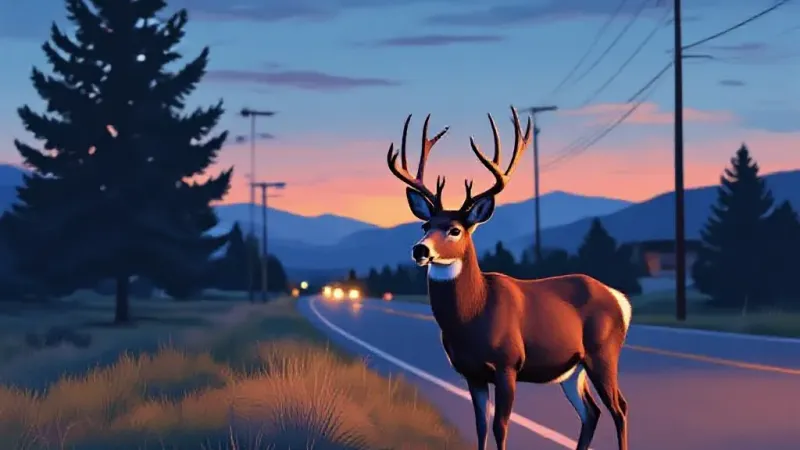
Utah drivers should anticipate an increased risk of deer-vehicle collisions beginning November 1, coinciding with the end of daylight saving time and the onset of longer nights. State wildlife managers with the Utah Division of Wildlife Resources (DWR) are advising heightened vigilance, attributing the elevated risk to deer migration to lower elevations and the start of their mating season.
Makeda Hanson, who coordinates the state’s wildlife migration initiative, indicated that November typically presents the highest risk for these incidents. Deer are actively on the move, migrating in search of food sources at lower altitudes. Additionally, it is mating season for deer, prompting male deer to roam more widely in search of mates, which increases their presence near and on roadways. Hanson noted that shorter daylight hours during this period inherently reduce visibility for motorists, further compounding the issue.
The DWR emphasizes that early mornings and evenings—common commuting times for both humans and deer—present the greatest danger. Drivers are urged to remain alert, turn on their high beams when conditions allow, and actively scan the entire road for potential hazards. Looking for the distant shine of an animal's eyes can help spot deer before they become a direct threat. The DWR also advises drivers to be aware of wildlife crossing signs, put away distractions such as mobile phones, and reduce speed if they observe a deer or other small animals near or on the road. It is crucial, however, not to swerve to avoid an animal, as this can lead to more dangerous accidents. Furthermore, drivers should never approach an injured animal.
Hanson's team at the DWR actively tracks and studies the migration patterns of various fish and wildlife species using GPS trackers and transmitters. This research helps inform strategies to reduce collisions. The DWR encourages Utahns to use a state-provided app to report roadkill, explaining that the collected data is vital for identifying optimal locations for new wildlife crossing structures. These structures are designed to allow animals to safely cross roads without interacting with vehicle traffic. As of October 8 this year, Utah roads have seen more than 3,700 animals hit by vehicles and subsequently removed. This figure contributes to a larger total of approximately 19,400 animals hit since 2022. To mitigate these incidents, the agency has installed over 60 wildlife crossings across the state, alongside fencing designed to funnel animals towards these safe passage points.