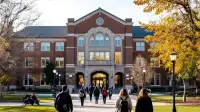

The University of Utah is revising its nuclear engineering minor core courses, a move intended to align with the state's push for increased nuclear energy development. The university's academic senate has approved these curriculum changes, which are on track to be available to students in Fall 2027, pending further approvals from university leadership.
Supathorn Phongikaroon, director of the Utah Nuclear Engineering Program at the University of Utah, stated that the minor has historically concentrated on healthcare technology, including medical physics, isotopes, radiochemistry, and various aspects of instrumentation and radiation detection. The new curriculum will pivot to offer more focus on nuclear energy and science, as well as nuclear science and technology. This shift is designed "to provide and support the state on workforce development," Phongikaroon explained.
The updated program will introduce seven new classes. One course is planned as a general education option, open to students from other disciplines, to educate them on the history of nuclear energy and its global impacts. Other new courses will delve into nuclear fuel cycles, the analysis of nuclear power plants and thermodynamics, the biological effects of radiation, nuclear systems and design, and nuclear security and nonproliferation.
These new offerings will not replace the existing healthcare technology pathways. Students will still have the option to pursue research in isotopes, radiochemistry, and medical physics. The revision represents an expansion of the university's academic portfolio for students interested in energy sectors.
The curriculum changes aim to support key state initiatives, including Utah Gov. Spencer Cox's Operation Gigawatt, which seeks to double the state's energy production. Additionally, the university's efforts align with Utah’s bid to host a nuclear lifecycle innovation campus, a project backed by the U.S. Department of Energy to bolster nuclear fuel operations.
Interest in the nuclear industry among University of Utah students has reportedly grown alongside increasing announcements about nuclear energy from Utah elected officials. For instance, an introductory nuclear engineering class has seen its enrollment nearly double, from 20-25 students to almost 50. The new classes are projected to accommodate 30 to 40 students each, according to Phongikaroon.
Phongikaroon, who has been with the university for about a year, previously spent more than a decade in a similar role at Virginia Commonwealth University. He notes that Virginia’s grid already incorporates nuclear energy, with two power plants supplying at least 34% of the state's electricity—a technology Utah currently lacks. He expressed a desire for more public understanding and acceptance of nuclear energy, hoping to cultivate a larger workforce that is open and receptive to the field. He observed that while people in Utah are interested in nuclear energy, the perception differs from areas where it is already implemented, raising questions about its potential success here.