
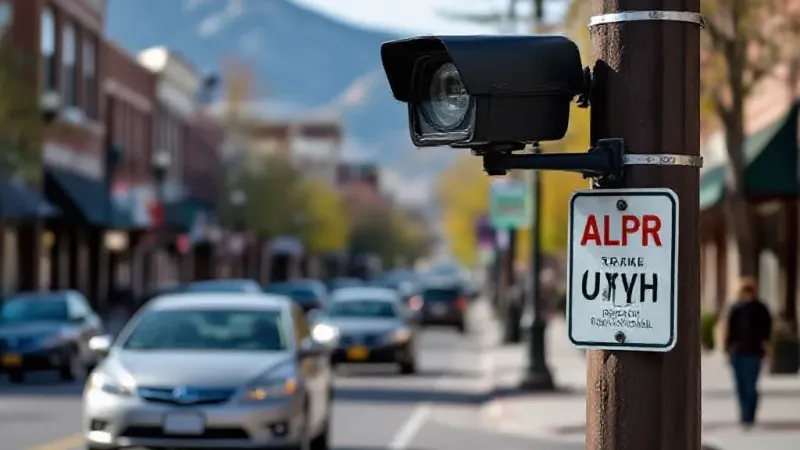
Salt Lake City is examining its long-standing use of automatic license plate readers (ALPRs) following public inquiries into how the surveillance technology is deployed and the safeguards in place to protect resident privacy. The city currently operates 70 of these devices, some strategically positioned in high-traffic corridors, such as 700 East near Liberty Park, silently recording vehicle license plates.
These cameras have been operational for a decade, yet many residents, including Christa Baxter, continue to voice questions regarding their application. Baxter expressed concern over who has access to the collected data and what security measures are in place to prevent misuse. She noted a recurring pattern of individuals within law enforcement or other agencies potentially utilizing such technology for personal aims.
Another resident, Gibbs Baracka, stated he was unaware that license plate readers were already active across the city. Baracka conveyed a sense of unease upon learning about the devices, suggesting that information about their locations should be provided to citizens, perhaps through the Department of Motor Vehicles, to ensure public awareness.
In response to these growing concerns, Salt Lake Police Chief Brian Redd indicated his department is actively working to reassure residents. Chief Redd stated that the police force is listening to public feedback and striving to ensure officers use the technology appropriately. The department aims to prevent the technology from causing an "undue invasion of privacy, civil liberties," according to Chief Redd.
Chief Redd's command staff is collaborating with members of the Salt Lake City Council on a proposed ordinance. This legislative effort seeks to establish clear guidelines for the use of ALPR technology and to define consequences for any potential misuse.
Salt Lake City Council Chair Alejandro Puy highlighted specific areas targeted for revision within the proposed ordinance. Chair Puy noted that it is likely time to reassess the duration for which images captured by the readers are retained in cloud storage; this period is currently set at nine months.
Chair Puy further explained that the council is debating the implementation of a system for auditing the use of the ALPRs. This system would be codified to include explicit consequences in instances of misuse. The overarching goal, as articulated by Chair Puy, is to guarantee that the technology's use is correctly monitored and to introduce the necessary protections that the public deserves.
The ongoing discussions between the police department and the city council underscore a commitment to balancing public safety needs with the privacy rights of Salt Lake City residents, striving for transparency and accountability in the deployment of advanced surveillance tools that have become a pervasive part of the urban landscape over the past ten years.