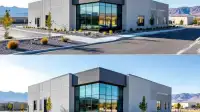

A project named "GoldMine" is being eyed for the small town of Fairfield, near the border of Eagle Mountain, proposing a significant "mixed-use industrial and technology development" that could include a large data center campus.
The project, envisioned by development firms EGI Real Estate and DAI Utah, proposes dedicating 933 acres to a "business park" and industrial development, which would feature "technological campuses" and "data centers." Additionally, the plan includes 140 acres for "ranchette" rural homes on one- to three-acre lots and approximately 80 acres for commercial lots. These details are outlined in Fairfield Planning Commission public documents, which include a preliminary draft plan from the developers.
Fairfield Mayor Hollie McKinney stated the project is "still in the early, preliminary planning stages." McKinney confirmed that Fairfield "has not received a development application for this project, so the town has no plans to evaluate or permit at this point," in an email to Utah News Dispatch. She noted that developers have been cooperative, considering Fairfield’s residents, rural character, and water use in preliminary discussions. Mayor McKinney added that she would be in a better position to comment on the project and its potential impacts as plans become more concrete.
Fairfield's planning commissioners were briefed on the project by EGI principal Jared Westhoff during a July meeting. They voiced concerns and questions regarding water use and water rights, but also expressed approval for the direction of building rural residential homes on large lots to prevent future high-density housing.
However, Deeda Seed, a senior campaigner for the Center for Biological Diversity, views the "GoldMine" proposal with concern, particularly due to its location in the Cedar Valley, an area already facing water scarcity and increasing emissions from various projects. Seed called the proposal "crazy," stating, "The fact that this thing is called GoldMine kind of sums it up. You know, these developers are digging for gold in the form of data center development. And the harm to everyone else is really significant and is totally not worth it.”
Seed worries that Fairfield, with a population of roughly 180 people, may lack the necessary resources, from permitting staff to firefighting capabilities, to adequately manage and mitigate the project’s impacts. She also questioned the level of public awareness among Fairfield residents and those in nearby Eagle Mountain, which has a population of about 65,000, suggesting the project might be "flying under the radar." Seed referenced a situation in Mona, a small rural city in Juab County, where a 3-million-square-foot data center was approved months before residents became widely aware, as reported by the Deseret News. She expressed concern that GoldMine could unfold similarly for Eagle Mountain.
The Cedar Valley is no stranger to data center development. Roughly three miles east of the proposed GoldMine site, Meta owns an expanding data center campus in Eagle Mountain. Approved in 2018 as a 2.4 million-square-foot Facebook data center, Meta's campus is planned to surpass 5 million square feet when fully built out. Seed further noted that Meta's data center and other projects, such as Enyo Energy's proposed power plant near the Meta campus in Fairfield, are collectively increasing emissions in the Cedar Valley. She fears these additions could push the area back into federal nonattainment status for air quality, potentially leading to a "full-fledged disaster in terms of air quality."
In response to Seed’s concerns, Mayor McKinney acknowledged understanding issues around public awareness, water use, and emissions. She reiterated that because Fairfield has not received a development application, the town is not currently in a position to evaluate or permit the project. McKinney assured that "When an application is submitted, we will review its specific impacts and follow the applicable public process," prioritizing the protection of Cedar Valley's water resources and keeping residents informed.
The GoldMine project also falls within the Utah Inland Port Authority’s Pony Express Project Area, which means it could potentially qualify for subsidies through the port authority’s tax increment capture and bonding power. However, Ben Hart, the port authority’s executive director, stated in a prepared statement that "UIPA does not get ahead of the communities we partner with." He added that local leaders determine appropriate development, and UIPA supports established local priorities, aligning with the governor’s executive order and principles for responsible water and energy use.
Eagle Mountain’s Meta data center has come with substantial tax incentives, totaling approximately $150 million over 40 years for its first phase, and about $780 million over 40 years for its 567-acre expansion. These incentives claw back taxes that would otherwise go to entities like Alpine School District, Utah County, Unified Fire Authority, Central Utah Water Conservancy District, and Eagle Mountain. While the Meta development has created jobs and increased property tax revenue, Eagle Mountain nearly doubled its property tax rate this year, as reported by The Salt Lake Tribune, to capture about $2.1 million more for police, expanded city staff, and increased employee wages.