
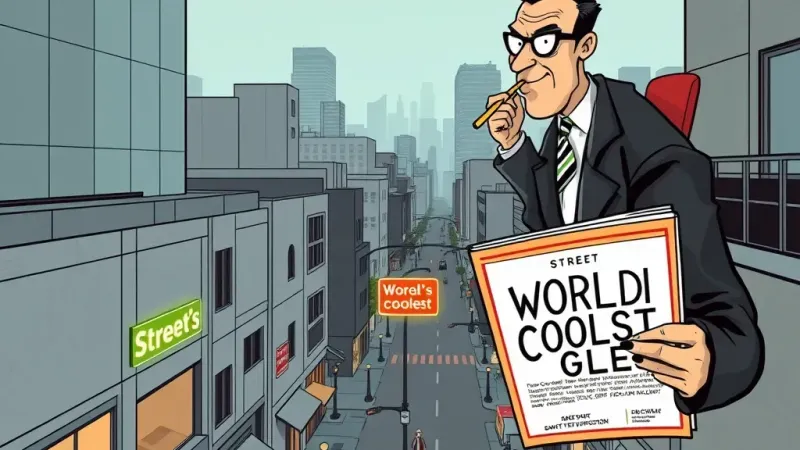
Global lifestyle publication Time Out has released its definitive annual ranking of the world’s coolest streets, celebrating 28 distinct strips of asphalt where you can pay eleven dollars for a glass of tap water and stare directly into the dead, unblinking eyes of a tech founder.
Taking the top spot this year is a four-block stretch of former industrial warehousing that has successfully purged every trace of working-class history, replacing it with five competing artisanal oat milk dispensaries and a concept store that sells blank canvas tote bags for two hundred dollars. Urban experts have hailed the transformation as a masterclass in organic community building, provided your definition of community involves a median household income of three hundred thousand dollars and zero grocery stores that sell canned beans.
“What makes this street truly special is the vibrant, authentic energy you only get when a neighborhood has completely priced out everyone who ever wrote a song or painted a wall there,” said regional editor Chloe Vance, adjusting her vintage frames while standing outside a boutique hotel that used to be a community health clinic. “When you walk down this corridor, you aren’t just walking down a sidewalk. You’re participating in a rich, dynamic ecosystem of venture capitalists drinking cold brew at two o'clock on a Tuesday afternoon. There is a palpable buzz in the air, mostly generated by the idling engines of Teslas waiting to pick up a single gluten-free scone.”
According to the publication’s rigorous methodology, a street achieves cool status by meeting several strict architectural and cultural benchmarks. These include the complete absence of trees that drop messy leaves, the strategic placement of gray concrete benches designed to inflict physical pain on anyone attempting to sit for more than four minutes, and a police presence polite enough to arrest unhoused people using passive-aggressive wellness terminology.
Local residents who have lived in the area for forty years expressed profound excitement about the neighborhood’s newfound global recognition, primarily because it means their landlords can finally double their property taxes without filing the paperwork in person.
“We used to have a neighborhood hardware store where you could buy a wrench and talk to a guy named Sal who had lived through three mayors,” said longtime resident Arthur Pendelton, currently packing his belongings into a cardboard box while three men in Patagonia vests measure his living room for a minimalist drop-in kitchen. “Now we have a multi-sensory olfactory experience where you pay twenty-two dollars to smell burning palo santo while a guy explains the blockchain to his dog. It’s progress. Time Out said so.”
Other entries on the global list include a cobblestone alleyway in Paris where three distinct fashion houses simultaneously went bankrupt trying to sell distressed denim, and a sun-drenched boulevard in Tokyo that now consists entirely of matcha vending machines operated by venture-backed startups that have never turned a profit.
City planners around the world are already rushing to replicate the winning formula. Municipal governments from London to Chicago are currently drafting emergency ordinances to replace all public benches, community centers, and affordable housing complexes with gravel-strewn pop-up markets featuring rotating selections of overpriced fermented cabbage.
Ultimately, the annual ranking serves as a vital reminder of what makes urban life truly magical: the comforting knowledge that no matter how broke you are, you can always stand on the sidewalk of a globally celebrated corridor and watch someone buy a five-dollar piece of charcoal-infused sourdough.