

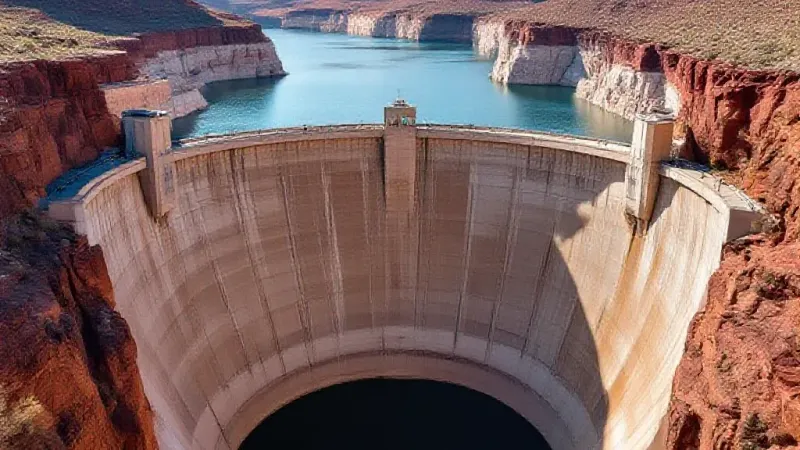
SALT LAKE CITY — States relying on the Colorado River, including Utah, are facing difficult decisions as dwindling water supplies present a fundamental challenge: how to allocate water that simply isn't there. This complex situation was a central topic of discussion Monday during a special meeting of the Upper Colorado River Commission, which includes representatives from Utah, Colorado, Wyoming, and New Mexico.
Gene Shawcroft, chair of the Colorado River Authority of Utah, emphasized that managing these water challenges is becoming increasingly difficult as demand continues to rise while available supplies remain limited. Shawcroft highlighted the stark reality, noting that expecting a large volume of water but receiving only a fraction means allocations must be drastically cut. This is a difficult concept, he explained, for those accustomed to having ample access to reservoir water.
One immediate action discussed was the planned release of approximately 450,000 acre-feet of water from Flaming Gorge Reservoir into Lake Powell. This crucial transfer is expected to be completed by the end of September. The primary goal of this water release, according to Shawcroft, is to help maintain Lake Powell at levels sufficient for continued hydropower production and to ensure downstream water deliveries can proceed. He clarified that these reduced releases from Lake Powell, combined with water from Flaming Gorge, are designed to stabilize the lake for these vital functions.
Upper Colorado River Commission Chair Becky Mitchell acknowledged the ongoing challenges posed by the persistent drought. Mitchell stated that the work is not yet done and, while there is hope for better conditions next year, preparedness is key. Utah has also experienced significant impacts from a poor snowpack year, which contributed to the broader water scarcity. Shawcroft described the April snowpack as the "worst on record" by a substantial margin, illustrating the severity of the situation across the state.
The effects are already being felt locally. Shawcroft pointed to Ferron Creek, a tributary of the Green River, where water allocations were cut by 75%. He stressed that these are not isolated Colorado River issues, but rather symptoms of a statewide problem, with Utah experiencing "woefully inadequate" snowpack this year. The commission also received guidance from the Bureau of Reclamation regarding river operations for the next couple of years. This guidance, Shawcroft noted, offers a clearer picture of future conditions, though he added that Mother Nature remains the most significant variable.
Shawcroft indicated that the new operational approach focuses on managing based on "what actual water we have and not what we forecast." For Utah and the other states dependent on the Colorado River, Shawcroft reiterated that there are no simple solutions. He concluded by explaining that while officials wish for an easy answer to natural fluctuations, they must ultimately adapt to the water that is available, as wishing for more does not provide water for homes or irrigate fields.