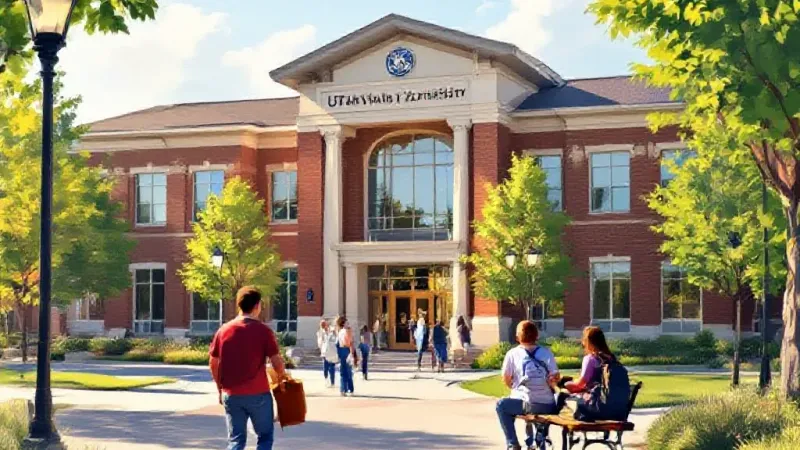
Utah Valley University recently released an independent, external review detailing findings related to the fatal shooting of conservative activist Charlie Kirk on its campus about a year ago. The review, commissioned by the university and conducted by a team of law enforcement and security specialists and attorneys, concluded that "at no time" leading up to or after the shooting did any UVU employee or agent act in "bad faith or in willful and wanton disregard for the safety of others."
However, the report also identified "several actions, omissions, circumstances, and institutional practices that warrant attention" as UVU considers strengthening campus event safety. The review team based its findings on site visits, over 70 interviews, and a comprehensive review of university policies, training, records, and digital evidence.
Among its 10 "key findings," the review noted UVU's status as "a large and growing public university with a complex risk environment," which includes large events, high-profile public speakers, and protests. The report raised concerns regarding the university’s police department’s "staffing levels, training structure," and "leadership framework." Specifically, the report described the university’s police chief’s organizational placement as not aligning with typical structures for public safety leaders at large universities. It also found UVUPD staffing appeared limited compared to the university's operational scale and event environment.
The review also highlighted limited coordination with Turning Point USA's security, the event organizer. While university police coordinated some security issues just prior to the event, the report noted no actual face-to-face contact or pre-event briefings occurred between UVUPD leadership and Turning Point USA's security team. The report identified this lack of contact as a missed chance to identify and mitigate real-time security concerns before the event started.
Furthermore, UVU deferred several "key event-security decisions" to Turning Point USA, according to the review. Despite concerns from UVU staff about holding the event in an outdoor courtyard and using TPUSA's ticketing system rather than the university’s own, UVU allowed these preferences. The report asserted these decisions placed the event in an area that was more difficult to control and limited UVU’s ability to obtain "reliable, real-time information regarding anticipated attendance and crowd size." It concluded that UVU should have retained decision-making authority over security-related issues. Experts had previously criticized the light security for Kirk’s appearance, staffed by six UVU officers without assistance from the Utah County Sheriff's Office.
To address these issues, the report recommended UVU consider establishing a senior campus safety leadership role, such as a vice president or associate vice president for campus safety and security. This new role would be responsible for all public safety operations, including emergency management. Additionally, the review advised UVU to conduct a formal staffing and pay analysis to help determine appropriate staffing levels for its police department.
In response to the review, the Kirk family’s attorney, Brett Parkinson, stated the report "reaffirms the facts we laid out in our notice of claim" released earlier this month, signaling a forthcoming lawsuit. Parkinson’s allegations included that UVU security was "woefully understaffed and unprepared." He stated that UVU, by hosting the event, assumed responsibility for the safety of all in attendance, including Charlie. Parkinson added that UVU leadership and law enforcement bore the ultimate responsibility, and called for accountability for the university’s fatal shortcomings to achieve justice. While the report does not explicitly state the university was "woefully understaffed," it does raise concerns about police staffing levels relative to the university's size and complexity.
University officials, in a news release issued Friday that included a link to the full report, acknowledged the review recognized UVU’s existing campus safety policies and resources, but also identified a "need for more consistent implementation, clearer responsibilities, and stronger coordination" during major events and emergencies. To strengthen coordination and accountability, university officials announced the creation of a chief public safety officer position, which they expect to fill later this year. This officer will coordinate campus police, emergency management, fire safety, and campus and event security, overseeing the implementation of many review recommendations.
Other safety efforts are "underway," according to university officials, including enhanced safety training, strengthened event security planning, updated ticketing procedures, and closer coordination with external law enforcement agencies. UVU President Jon Anderson stated that while the events of September 10th would remain part of UVU’s history, they would not define its future. He affirmed the university's responsibility to care for its community, learn from the review's findings, and follow through on its recommendations. Anderson also noted that several recommendations from the external report align with changes already completed or underway. The university declined to conduct interviews about the report Friday.
Separately, earlier this month, a judge ordered 23-year-old Tyler Robinson to stand trial for aggravated murder in Kirk’s death. Robinson, accused of using his grandfather’s hunting rifle to fatally shoot Kirk from a rooftop on campus, has pleaded not guilty. If he is convicted, prosecutors have indicated they will seek the death penalty.
Beyond the university’s review, the Utah System of Higher Education (USHE) last year launched a task force to study campus safety statewide across Utah's eight public colleges and universities. This group is developing a set of standards for these institutions, which are expected to inform a broad school safety proposal. Rep. Ryan Wilcox, R-Ogden, plans to sponsor this legislative proposal in next year’s session, scheduled to convene in January, after the task force releases its report later this year.