
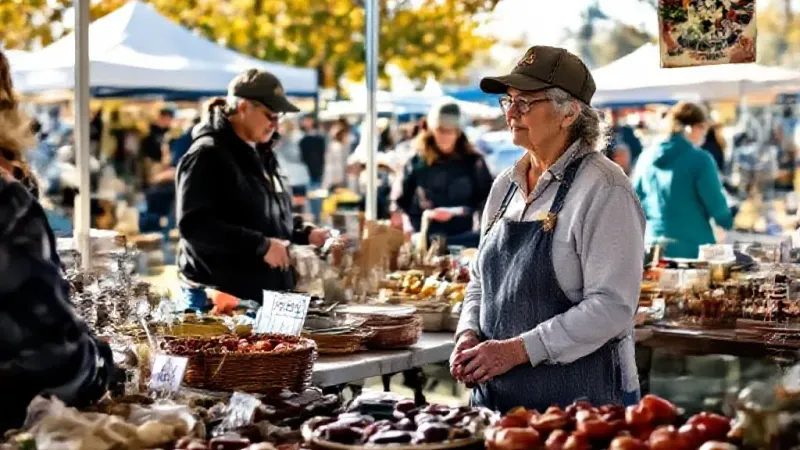
SALT LAKE CITY, Utah — Vendors operating at the annual Utah State Fair have reported facing increased operational costs this year, impacting everything from travel expenses to art supplies. Despite these challenges, experiences varied among long-time participants, with some booths matching previous sales while others noted a decrease in customer spending.
Charlie Doucet, who has owned Charlie's food booth for 11 years, observed that "a lot of vendors here" were charging significant amounts for food. He stated his business focused on "the affordability part of it" to ensure customers would return year after year. Doucet initially doubted his ability to match last year's totals, saying he thought "we're never going to match this." However, by the final day, his booth had matched the previous year's revenue, indicating a positive outcome on the food sales front.
Further down the fairgrounds, Winnie Allen, who has traveled with her balloon booth for several years, pointed to significant increases in her travel expenses. Allen explained that rising gas prices "really affects us the most because we travel," directly impacting her business. She identified these rising fuel costs as "the most expensive part of our living out here." Regarding customer behavior, Allen noted that while people were "for the most part still enjoying themselves and coming out," they were "just not spending as much as normal."
Dean Howell, a caricature artist with a remarkable 49-year history at the Utah State Fair, reflected on the profound personal connection he has to the event. He shared that doing caricatures has been "pretty much my life," and the fair itself "changed my life." Howell detailed the escalating costs of his art supplies. He mentioned that a single piece of paper, essential for his work, costs "over $2," and noted that high-quality markers, priced at "like eight bucks," often only last for "like two drawings." These considerable increases in supply expenses have noticeably affected his business this season. Howell acknowledged that this year had been "kind of down for me" compared to his usual performance, but he maintained a positive outlook, adding he was "happy with what I've got."
Despite the financial pressures and the mixed sales results reported by different vendors, a common sentiment emerged regarding their commitment to the fair: the community connection. Vendors highlighted that it is "the people that make them come back every year." Winnie Allen encapsulated this resilience, stating that "you just got to roll with the punches." She further explained that some years were good, and some were not, but if it were "terrible," they "wouldn't come back.” This perspective reflects the enduring dedication of many long-time participants to the annual event, regardless of yearly fluctuations in profit.
As the fair concludes, Utah State Fair officials are still in the process of compiling and calculating the final attendance numbers and overall revenue generated from this year's event. These figures will provide a comprehensive economic picture of the fair's performance amidst the reported challenges faced by its vendors.