
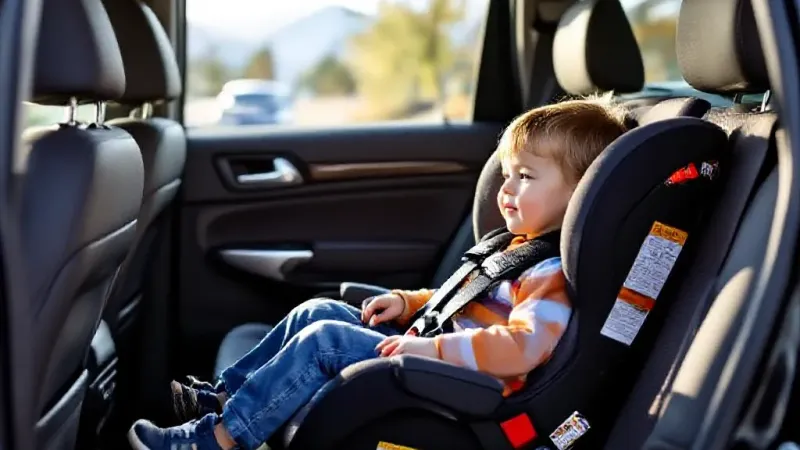
More than 65% of car seats in Utah are installed or used incorrectly, significantly reducing their ability to protect a child in a crash, according to experts. This concerning statistic means that a majority of young passengers may not be adequately secured in vehicles across the state, leaving them vulnerable during an accident.
The critical difference between a properly secured child and one who is not can be a matter of life or death, states Dr. Hilary Hewes, a pediatric emergency medicine physician at Primary Children's Hospital at the University of Utah. Dr. Hewes recounted a tragic incident where a family of seven was traveling in a van. Six family members were appropriately secured in car seats or wearing seatbelts, while one child was not. In the resulting crash, the child who was not in a car seat or seatbelt was ejected from the vehicle and died, while the other family members sustained only scratches and bruises. Dr. Hewes emphasized, "it makes such a difference: an appropriately placed car seat and seat belt."
One of the most frequent errors observed by child passenger safety technicians involves the chest clip and harness fit. Sarah Knudsen, a child passenger safety technician also at Primary Children's Hospital at the University of Utah, noted that many parents leave the harness too loose. For proper harness fit, Knudsen advises that there should be no slack that can be pinched at the shoulders. She also specified that the chest clip should be positioned right at the child's armpit level, directly on their sternum. This placement is crucial because it keeps the clip away from the child's belly, where internal organs are vulnerable to injury during a collision.
Experts also warn about the dangers of a seat belt positioned too high on a child's stomach. An instructor demonstrated the potential internal damage, explaining that when a seat belt is too high on a child's stomach and tightens during a crash, "the insides squish out." This improper belt placement can lead to severe internal injuries, highlighting the importance of correct seat belt routing for older children who have transitioned out of car seats but still require booster seats or specific belt positioning.
Child Passenger Safety Week, observed the week of September 20, is a designated period when instructors actively share common and dangerous car seat mistakes parents make. While this week serves as an important reminder, resources are available year-round for parents and caregivers who are unsure about their car seat installation or usage. Car seat inspection sites are available throughout Utah, offering professional assistance to ensure children are safely secured in vehicles. Utilizing these resources can help prevent serious injuries or fatalities by correcting common errors and ensuring car seats provide the protection they are designed for.