
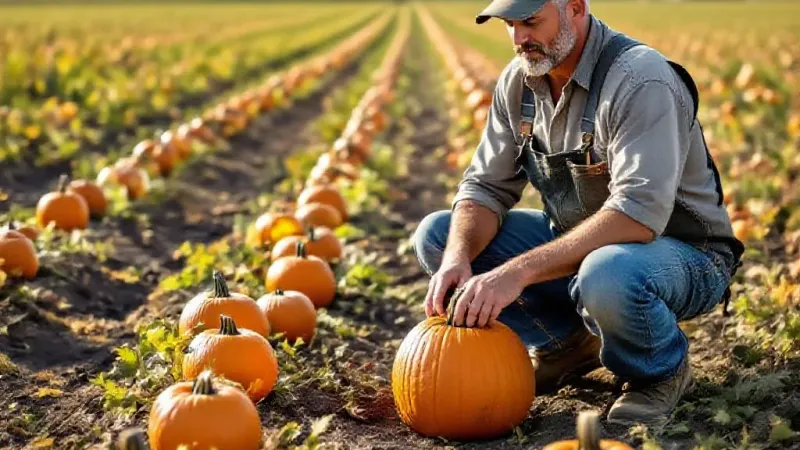
Beck Family Farms in Centerfield, Utah, is grappling with a dramatically different fall season as the farm anticipates a significant 80% drop in its annual pumpkin harvest. David Beck, a fifth-generation farmer, stated that the farm typically produces about 3,000 tons of pumpkins each year. However, this year, he expects only around 600 tons to be harvested.
This substantial loss follows a challenging growing season marked by severe drought, record high temperatures, and other difficulties, Beck explained. He noted that the extreme heat prevented blossoms from fruiting and created conditions too hot and smoky for bees, which hindered pollination for summer blossoms. Beck underscored the severity of the loss, stating that one 60-acre field that yielded approximately 1,000 tons of pumpkins last year produced just 12 pumpkins this season.
The reduced harvest is also taking a toll on seasonal workers who depend on Beck Family Farms for employment. Beck stated that many employees, including immediate family and local workers, structure their lives around working for the pumpkin season, which typically lasts about two months. This year, however, workers are expected to have employment only through September, a considerable reduction in their usual work period.
The effects of the poor harvest are evident at the farm itself, where pumpkin sheds that would normally be full at this point in the season are nearly empty, according to Beck. He described the situation as having barely enough pumpkins for the next day's orders.
Beck Family Farms is a major supplier, providing pumpkins to grocery stores across Utah, Nevada, Colorado, and other Western states. To help fulfill its orders amidst the shortages, the farm has had to purchase pumpkins from other growers. This effort was met with further setback when 300 tons of pumpkins lined up for purchase in Delta, Utah, were hit by a hailstorm about a week ago, destroying an estimated 250 tons, Beck reported. The farm currently has enough of its own pumpkins to continue supplying customers through September.
Chance Hansen, who has worked at Beck Family Farms for the past 10 years, cautioned that consumers could start noticing the shortage as the season progresses. Hansen suggested that shoppers might find "very few pumpkins left later in the season — if any."
Despite the difficult year, David Beck expressed his hope that his family can continue the farm's legacy, which began with his great-great grandfather. He noted the family's determination to maintain the tradition. However, Beck also highlighted the increasing difficulty of sustaining a family farm. He stated that agriculture is currently not profitable, raising concerns about the feasibility of continued borrowing without significant change. For now, Beck Family Farms is proceeding with plans to open its fall pumpkin season, even as the family navigates one of its most challenging harvests to date.