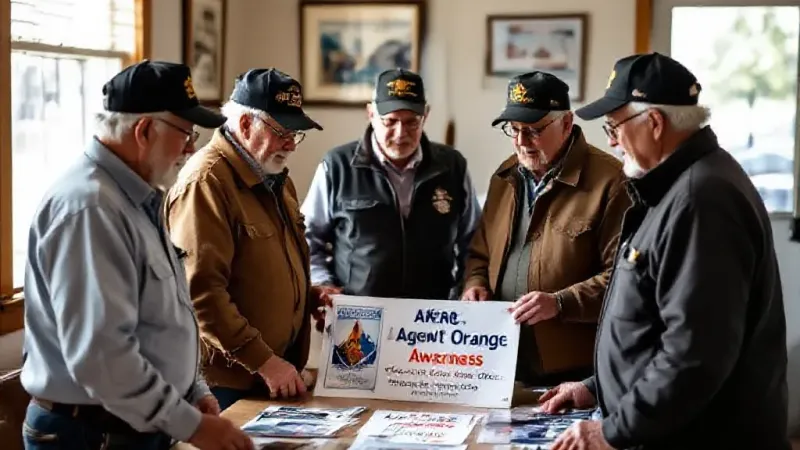
Agent Orange Awareness Day, observed annually on August 10 across Utah and the country, highlights the lasting impact of the toxic chemical on Vietnam veterans and recognizes ongoing local efforts to honor those affected. The date marks when the U.S. began spraying Agent Orange in Vietnam on August 10, 1961, according to the Blinded Veterans Association. The herbicide, while intended to save American lives, proved harmful due to its dioxin content, which the U.S. Department of Veterans Affairs states was an unwelcome byproduct of its manufacturing. Exposure to Agent Orange and similar toxic herbicides has led to the deaths of hundreds of thousands of Vietnam veterans from associated illnesses.
In Sunset Veterans Park, the Utah Agent Orange Veterans Foundation has been actively increasing public awareness of the tragic cost of using toxic chemicals during the war in Southeast Asia. Since last November, the foundation has been engaged in building one of the largest Agent Orange memorials in the United States. Numerous organizations support this mission, among them the Rivetin’ Rosie’s Project.
In observance of Agent Orange Awareness Day, the Rivetin’ Rosie’s Project shared a message on its Facebook page, paying homage to victims of Agent Orange exposure and reminding the public that its effects continue today. Earlier this year, on February 12, the group also supported the Utah Agent Orange Veterans Foundation at a ceremony held at the Capitol in Salt Lake City. Patriotic members of the Rivetin’ Rosie’s Project attended to honor Vietnam veterans exposed to Agent Orange and similar toxic herbicides.
Hannah Turk, a board member of the Utah Agent Orange Veterans Foundation and a co-founder and vice president of the Rivetin’ Rosie’s Project, helped facilitate the event. During the ceremony, Representative Tyler Clancy read an official citation on the floor of the House of Representatives, recognizing the veterans present and all Utah veterans exposed to Agent Orange. The presence of members of the Rivetin’ Rosie’s Project, evoking a nostalgic glimpse of American women's contributions in World War II, made the event even more memorable.
Beyond the single-day observance, October is designated as Agent Orange Awareness Month. This month-long recognition was established because a one-day observance was deemed inadequate to sufficiently increase awareness of the toxic chemical. Agent Orange Awareness Month includes events designed to recognize veterans harmed by exposure to Agent Orange and similar toxic herbicides.
Looking ahead, October presents an appropriate time for Utah lawmakers to consider officially recognizing the Orange Heart Medal. This medal is a meaningful tribute to veterans who sustained internal injuries from exposure to Agent Orange, though it is not yet an official federal award. More than a dozen states have already joined in officially recognizing this medal, and Utah lawmakers could join their ranks, further honoring those impacted by the long-term health consequences of Agent Orange. The continued efforts by organizations like the Utah Agent Orange Veterans Foundation and the Rivetin’ Rosie’s Project strive to make a positive difference in the lives of veterans throughout the year.